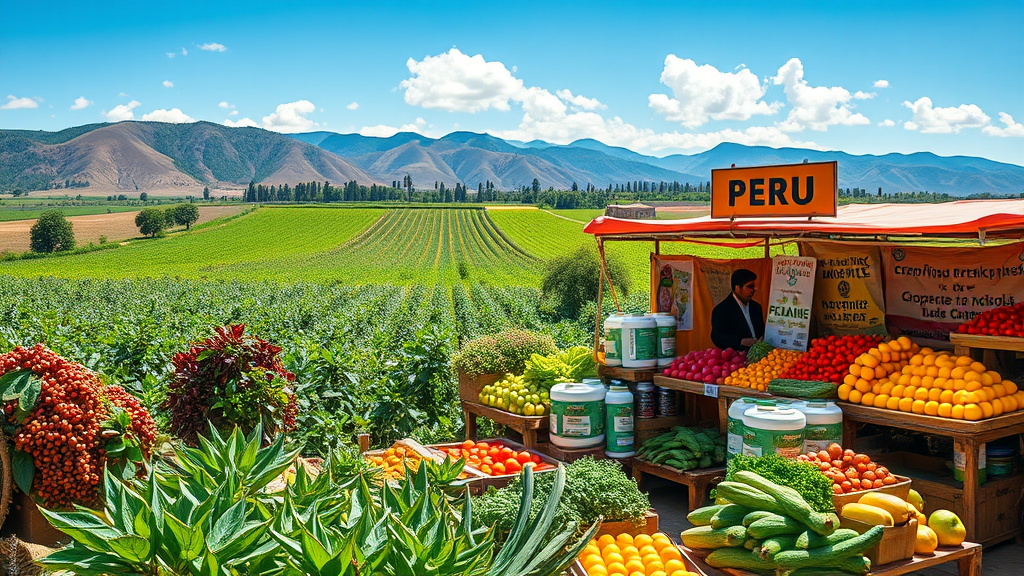
The agricultural sector in Peru is experiencing significant growth, particularly in crop protection products. According to recent projections, the sales of crop protection products in Peru are expected to reach approximately US$ 310 million in 2024, representing an impressive 8-10% increase from the previous year.
Rubén Carrasco, the executive director of Cultivida, attributes this growth primarily to the booming agro-export industry. In the first half of the current year, agro-exports saw a remarkable increase of nearly 12%, reaching US$ 4.309 billion in value.
Market Composition:
The Peruvian crop protection market has a unique composition, reflecting the country’s specific agro-climatic conditions:
- Insecticides: Leading the market with a 35% share
- Fungicides: Following closely at 30%
- Herbicides: Comprising a smaller portion of the market
Interestingly, Peru’s market structure differs from other tropical countries, where herbicides typically dominate with 60-70% of the market share. Carrasco explains this phenomenon, stating, “In Peru, as modern agriculture has developed in deserts, there isn’t much need for herbicides.”
Illegal Trade: A Growing Concern
While the crop protection market in Peru is flourishing, it faces a significant challenge in the form of illegal trade. This includes unregistered, counterfeit, adulterated, repackaged, smuggled, and stolen products. Smuggling, in particular, represents the largest share of this illegal market.
Key statistics on illegal trade:
- Smuggled products account for 10% of the total crop protection market, equivalent to US$ 30 million annually.
- Adulterated products make up 4% of the market.
Most smuggled products enter Peru from Ecuador, where pesticides are exempt from Value Added Tax (VAT). These illegal products primarily affect small-scale farmers who may lack access to technology and knowledge about proper product sourcing.
The impact of illegal trade goes beyond economic concerns. It poses significant risks to:
- Farmers’ health during application
- Consumers’ health when ingesting treated produce
- The environment
Cultivida’s Response:
To combat these issues, Cultivida is actively running awareness campaigns. They aim to educate farmers about the benefits of purchasing products from reliable stores that ensure proper sourcing.
Global Context:
The article also provides some global perspective:
- The global crop protection product market is valued at US55billion,withcounterfeitproductsaccountingfor1555billion,withcounterfeitproductsaccountingfor15 8 billion).
- The global seed market is worth US39billion,withfakeseedsrepresenting1039billion,withfakeseedsrepresenting10 4.4 billion).
Analysis:
This article highlights both the opportunities and challenges in Peru’s agricultural sector, particularly in crop protection. The projected growth in crop protection product sales indicates a robust and expanding agricultural industry, likely driven by increasing global demand for Peruvian agricultural exports.
However, the significant presence of illegal trade in the sector is concerning. It not only distorts the market and affects legitimate businesses but also poses serious health and environmental risks. The fact that smuggled products alone account for 10% of the market underscores the magnitude of this issue.
The unique composition of Peru’s crop protection market, with a higher emphasis on insecticides and fungicides rather than herbicides, reflects the country’s specific agricultural conditions and practices. This differentiation from other tropical countries suggests that solutions and policies for Peru’s agricultural sector need to be tailored to its unique circumstances.
The efforts by organizations like Cultivida to educate farmers about the risks of illegal products are crucial. However, addressing this issue will likely require a multi-faceted approach involving stricter border controls, harmonization of regional tax policies, and continued education and support for farmers.
In conclusion, while Peru’s agricultural sector shows promising growth, addressing the challenge of illegal trade in crop protection products will be vital for ensuring sustainable, safe, and competitive agricultural practices in the country.
Source