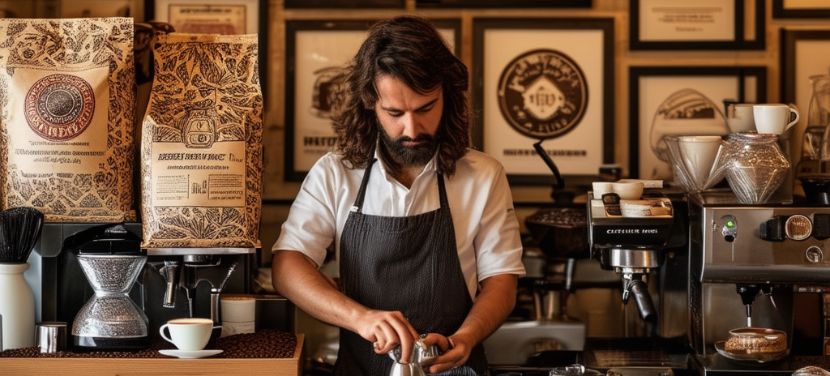
Peru’s coffee industry is brewing with success, as highlighted by recent data from the National Institute for the Defense of Competition and Protection of Intellectual Property (Indecopi). The South American nation boasts an impressive 12,620 registered trademarks related to coffee products and coffee-based goods, showcasing the vibrant entrepreneurial spirit in this sector.
Coffee Trademarks: A Diverse Landscape
These registered trademarks cover a wide array of products, including:
- Processed coffee beans
- Freeze-dried coffee
- Instant coffee
- Coffee-based pastries and confectionery
- Coffee-flavored ice creams
What’s particularly noteworthy is the diversity of trademark holders. From small-scale producers and family-run coffee farms to large multinational corporations, the coffee industry in Peru is as varied as the flavors of its beans.
Geographic Diversity
The entrepreneurial spirit in Peru’s coffee industry spans across the country. Trademark registrations come from various regions, including:
- Lima
- Junín
- Cusco
- Lambayeque
- Amazonas
- Arequipa
- San Martín
- Cajamarca
This geographic spread underscores the importance of coffee production to Peru’s regional economies and rural development.
Collective Trademarks: Empowering Communities
An impressive 529 collective trademarks have been registered by coffee-producing associations, federations, and cooperatives. These collective marks play a crucial role in supporting thousands of families, providing both employment and sustenance to coffee-growing communities.
Protected Designations of Origin
Peru’s coffee industry has achieved another significant milestone with two protected designations of origin. These special classifications are awarded to coffees from specific production zones in the Pasco and Cusco regions. The unique characteristics of these coffees stem from their cultivation areas and the natural and human factors involved in their production.
Café Villa Rica
- Declared a designation of origin on August 20, 2010
- Produced in the Villa Rica district, Oxapampa province, Pasco region
- Recognized as one of the world’s finest coffees
Café Machu Picchu – Huadquiña
- Declared a designation of origin on March 8, 2011
- Produced in the Huadquiña hamlet, Santa Teresa district, La Convención province, Cusco
- Noted for its excellent body
Analysis:
Peru’s coffee industry, as portrayed in this article, demonstrates a robust and multifaceted sector that combines entrepreneurship, tradition, and innovation. The high number of registered trademarks (12,620) indicates a thriving and competitive market, with players ranging from small family farms to large corporations. This diversity is likely to foster innovation and quality improvements in the industry.
The geographic spread of these trademarks across various regions of Peru highlights the decentralized nature of the coffee industry. This distribution can contribute to more balanced regional development and help sustain rural economies.
The presence of 529 collective trademarks is particularly significant. These marks suggest a strong cooperative movement within the industry, which can empower small producers, ensure fair trade practices, and maintain quality standards. Collective action can also enhance the bargaining power of small farmers in the global coffee market.
The two protected designations of origin for Café Villa Rica and Café Machu Picchu – Huadquiña represent a move towards emphasizing quality and uniqueness in Peruvian coffee. These designations can help command premium prices in international markets and enhance the overall reputation of Peruvian coffee.
However, the article doesn’t mention any challenges faced by the industry, such as climate change impacts, price volatilities, or competition from other coffee-producing nations. A more comprehensive analysis would need to consider these factors.
In conclusion, Peru’s coffee industry appears to be in a strong position, with a blend of individual entrepreneurship and collective action, supported by geographic indications that emphasize quality and uniqueness. The industry’s structure suggests it has the potential for sustainable growth and could continue to be a significant contributor to Peru’s agricultural exports and rural development.
Source