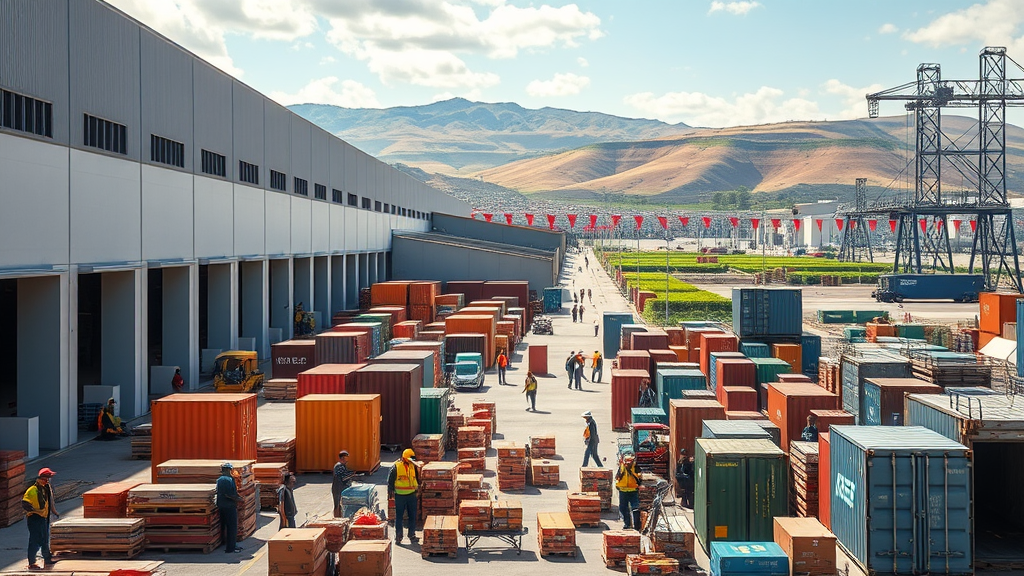

The Ministry of Transport and Communications (MTC) is making progress on a cargo and passenger transport project that is part of the National Railway Development Plan and will connect 15 localities. In July, the MTC declared the Lima-Ica railway project viable, an initiative that will connect the capital with the Ica region and benefit 6.5 million people.
The project aims to optimize not only passenger travel times but also logistics costs, with an estimated investment of approximately US$ 6.5 billion. According to the MTC, the railway will stretch over 280 kilometers, with two tracks linking the district of Villa El Salvador in Lima with the city of Ica. The project will include 15 stations and modernize the railway operating system, allowing freight trains to circulate at speeds of up to 100 km/h and passenger trains at 200 km/h.
This new infrastructure will connect important localities such as Lurín, Chilca, Asia, Cañete, and Pisco International Airport. The goal is to improve regional connectivity, with the railway expected to boost tourism and trade while reducing vehicular congestion and greenhouse gas emissions. Additionally, the Lima-Ica railway will facilitate connection with Line 1 of the Lima Metro, offering a more efficient and sustainable transport alternative between both regions.
Analysis
- Economic Impact:
- The project’s US$ 6.5 billion investment is significant and could stimulate economic growth in the regions it connects.
- Improved logistics could reduce transportation costs, potentially lowering prices for consumers and increasing competitiveness for businesses.
- The connection to Pisco International Airport could boost international trade and tourism.
- Transportation Efficiency:
- High-speed passenger trains (200 km/h) could dramatically reduce travel times between Lima and Ica.
- The project could alleviate congestion on highways, potentially reducing accidents and travel times for those still using roads.
- Environmental Considerations:
- A shift from road to rail transport could significantly reduce greenhouse gas emissions, aligning with global climate goals.
- However, the environmental impact of constructing 280 km of new railway should also be considered.
- Regional Development:
- Connecting 15 localities could spur development in smaller towns along the route, potentially leading to more balanced regional growth.
- Improved connectivity might encourage decentralization, with more people able to live outside Lima while still accessing the capital’s economic opportunities.
- Challenges:
- The project’s high cost could strain public finances or require significant private investment.
- Integration with existing transportation systems, particularly in urban areas, may be complex.
- Land acquisition for the railway route could be challenging and potentially controversial.
- Long-term Implications:
- This project could set a precedent for further railway development in Peru, potentially leading to a more comprehensive national rail network.
- Success of this project might influence transportation policies in other Latin American countries.
In conclusion, the Lima-Ica railway project represents a significant infrastructure investment with the potential to transform transportation and economic dynamics in central Peru. While it offers numerous benefits, careful planning and execution will be crucial to overcome challenges and maximize its positive impact.